In its quest to sell its product, Kotex had to navigate a delicate terrain. In the 1920s, a time when the mere discussion of menstruation was a societal taboo, Kotex faced significant challenges. The words “menstruation” or “period” were not mentioned in the advertisements. Instead, it employed careful messaging to convey how its product could discreetly manage periods for women without acknowledging what a period was.
The focus was not on flexibility of movement or hygiene but on the art of having a period without attracting any attention. By examining the ad’s language, imagery, and underlying messages, we can see how Kotex navigated societal taboos and gender expectations, influencing the perception of menstrual health for generations.
It has women’s enthusiastic approval!
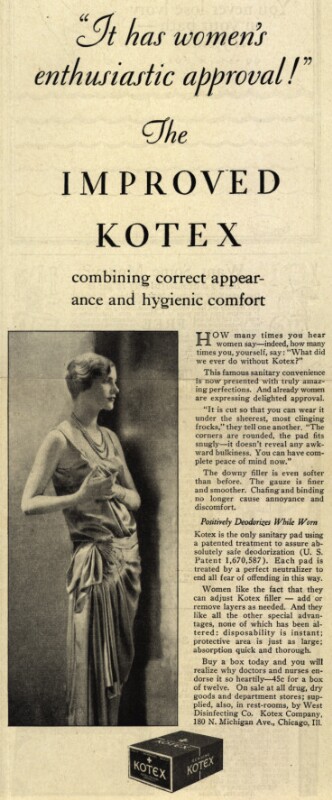
Women were granted freedom, as long as they menstruated in private, maintaining effortless non-menstruation in public. – Anna Weissman, HistoryColorado.org
Kotex’s 1928 advertisement “The Improved Kotex” featured an image of a young woman, the now-famous World War II photographer Lee Miller. With a composed, almost detached expression, the ad uses the tagline, “It has women’s enthusiastic approval.” The slogan uses confirmation bias and bandwagon appeal to convince female buyers to purchase this product by implying that other people are doing it, so you should, as well.
The image of Miller, the product’s target audience, does not overtly suggest she is menstruating or in need of a menstruation product. The product, cleverly presented as a box, is separate from the image, reinforcing its discreet nature. Kotex took this subtlety in advertising as a strategic approach to navigate the societal taboos surrounding menstruation.
Miller’s imagery was the first use of a real person in an advertisement for a menstrual product. Since speaking so openly about periods was scandalous in the United States, the usage of her image in the Kotex advertisement ruined her image as a model. She was later quoted saying she’d “rather take a photograph than be one.” Eventually, this led to her intriguing life as a photographer.
Progress Feels Like
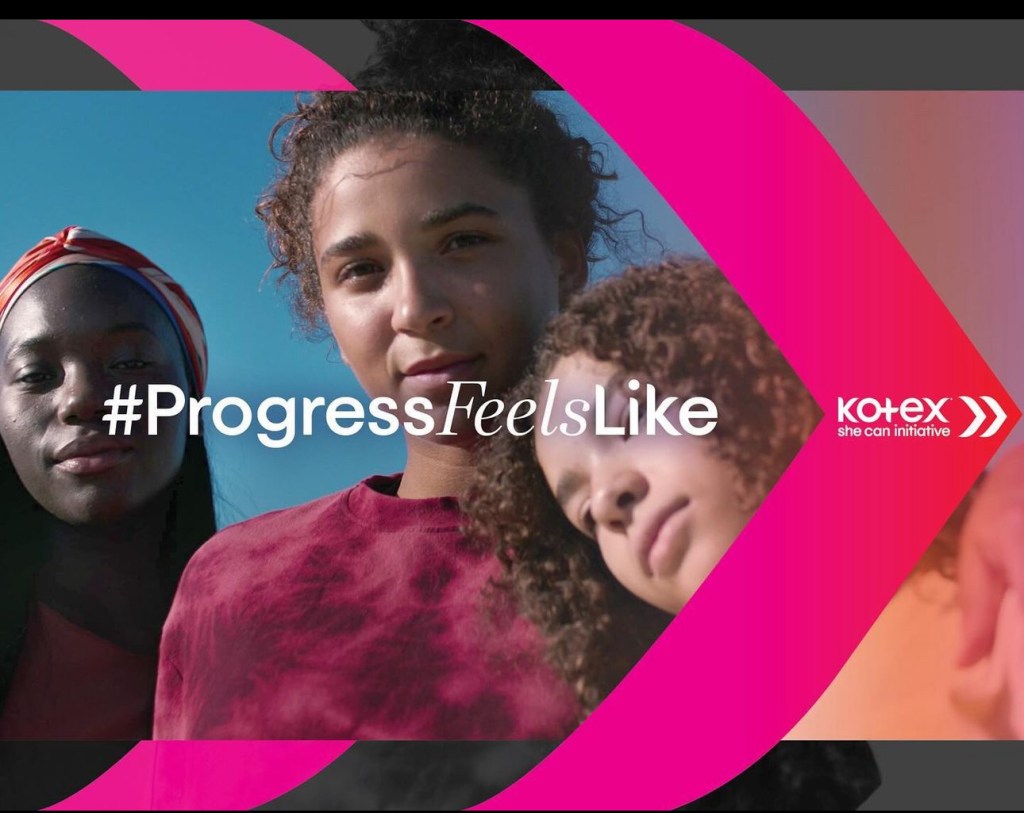
Modern campaigns address real-life issues women face, such as dismissiveness in society and the need for gender equity in representation. By focusing on authenticity, brands appeal to consumers who value transparency and social impact. This evolution in advertising has influenced not only consumer perceptions but also encouraged shifts in societal expectations about gender and health.

In Converging Media, authors John Pavlik and Shawn McIntosh explain that “advertising relies on principles and theories of persuasive communications and the media to have desired effects in changing behaviors.”
Kotex continued pushing advertising boundaries by releasing their 2024 “Progress Feels Like” campaign. In a powerful video and print advertisement, the brand explains that “being uncomfortable” is what women are “used to.” It explains that being dismissed by something that comes naturally is “not comfortable at all.” Meaning it is not menstruating or letting others be aware women are menstruating that makes them uncomfortable. Instead, it is the real threats they face and how society treats women in general that make them uncomfortable.
Kotex uses Idealization, whatever’s happening in the ad is ahead of where culture is right now, to pursuede the viewer to view women as powerful and strong, instead of meek, and to push our society further into a cultural shift.
As advertising evolved, brands like Kotex moved from implicit messaging to more direct, inclusive narratives. This shift reflects broader social change, as brands now tackle once-taboo subjects with openness. In the 2012 documentary Art & Copy, Janet Champ and Charlotte Moore from Nike began creating heartfelt advertisements about their issues, which resonated with other women. Their ads proved inspiring and empowering advertisements aimed at young girls and women can be smart and profitable
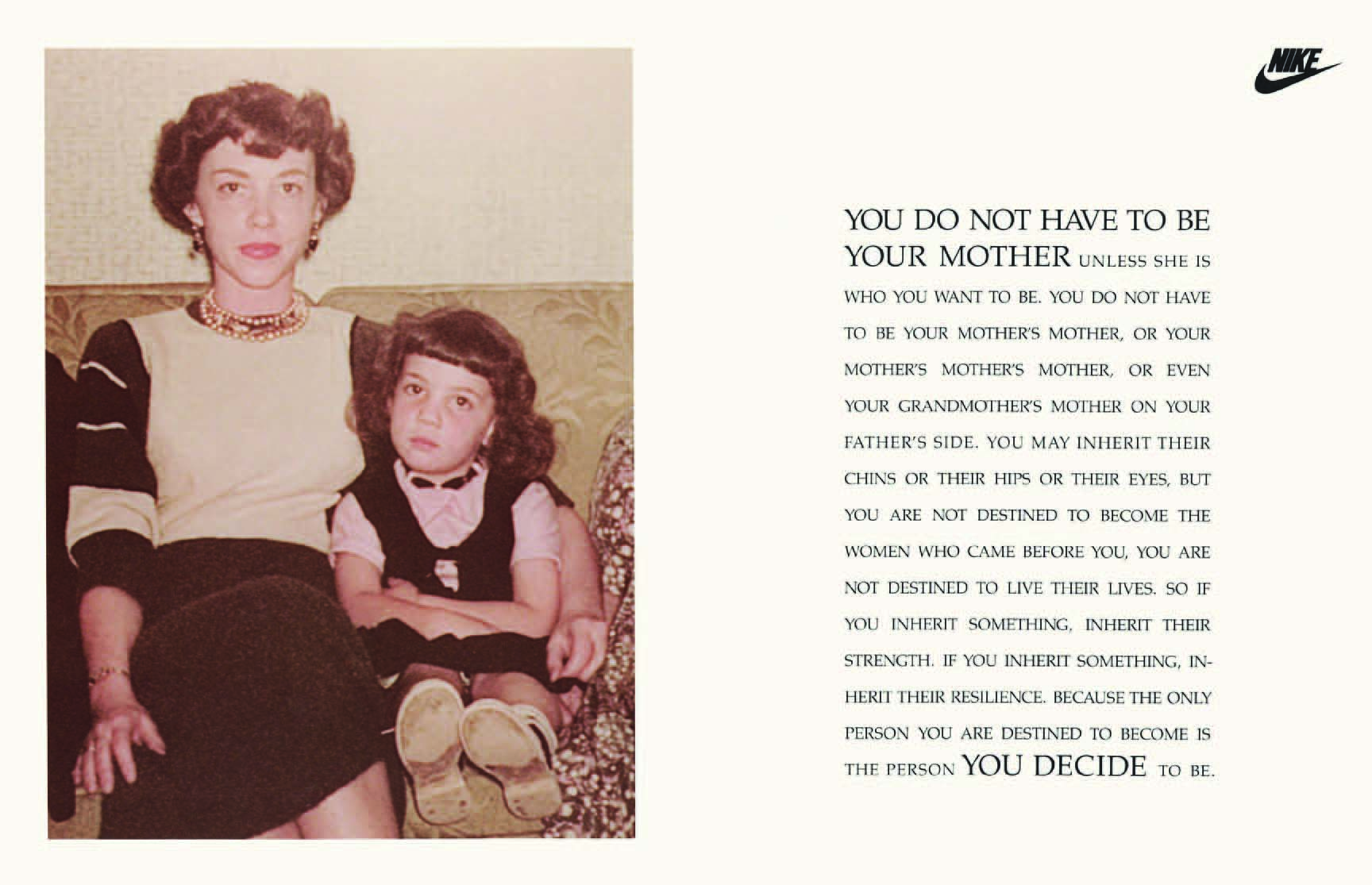
Cultural Shift Towards Inclusivity
Over time, the advertising industry has evolved significantly in both techniques and messaging, primarily due to changes in societal norms and technological advancements. In the 1920s, societal taboos heavily influenced Kotex’s subtle approach, where merely hinting at menstruation was considered bold. Today, however, brands like Kotex are pushing boundaries with campaigns that openly address women’s experiences and cultural issues, reflecting a shift toward authenticity and empowerment.
Technology, particularly the rise of social media and video platforms, has expanded advertising’s reach and enabled brands to create more impactful content that resonates on a personal level. Modern ads influence perceptions by addressing issues like menstruation with transparency and inclusivity, helping to dismantle prejudices and encourage change. As brands like Kotex continue this work, they help foster a culture where inclusivity and respect are central, further advancing how society views women’s health.
 Therefore I Am